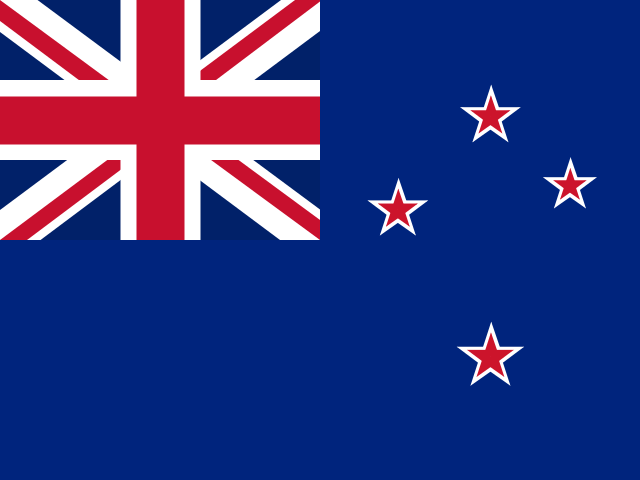
 You are an employee, no exceptions
This is a guide, not legal or immigration advice.
Rules change, vary by region and depend on your exact arrangement and nationality. Everything here was researched from official sources and dated, but figures go out of date — check the official links on this page before you rely on any of it, and get proper advice on your own visa position.
Where you stand
An au pair in New Zealand is an employee. Even the approved work exchange scheme — the arrangement that looks most like a cultural exchange — requires organisers to ensure your conditions comply with New Zealand employment law, including paying no less than the appropriate minimum wage. You get a written employment agreement, holiday and leave entitlements, and health and safety protection.
What makes New Zealand different: Board and lodging comes off as a percentage of your wages rather than a fixed amount, and the deducted amount still counts as wages — so it cannot push you below the minimum.
The numbers
Minimum wage
NZ$23.95 an hour
from 1 April 2026
Board
15% of wages
lodging only is 5%
Sick leave
10 days a year
doubled from 5 in 2021
Annual holidays
4 weeks paid
12 months continuous employment, then each following 12 months
Can you go?
Working holiday schemes are the usual route for young people, and New Zealand has agreements with many countries.
Approved work exchange schemes are reciprocal and run for up to twelve months. Whatever the route, the employment conditions attached to it are not optional.
Three things worth doing
Ten sick days, not five
The minimum doubled in 2021. Older guides and agency pages still quote five days. If someone tells you five, they are working from out-of-date information.
There is no overtime premium
Extra hours are whatever your employment agreement says. If you want a higher rate for evenings or weekends, it has to be written in — the law will not supply it.
Get the agreement in writing before you start
A written employment agreement with the statutory terms is a legal requirement, not a formality. If you do not have one, that is itself a sign worth paying attention to.
Check it yourself
Every figure on this page came from these. Rules change — if something matters to you, read it at the source.
Keep your own record
Whatever the rules say where you are, they only help you if you can show what you actually worked. NannyTank counts your hours as you work them, works out overtime at the legal rate where there is one, and turns the month into a claim your employer approves in one tap.
Start logging free for 14 daysOther countries
 South Africa
 United Kingdom
 Ireland
 Germany
 France
 Netherlands
 Spain
Spain
 Switzerland
 Austria
 United States
 Canada
 Australia
Researched from official sources and last reviewed 2 September 2026. Employing an au pair instead? See the rules for host families in New Zealand.